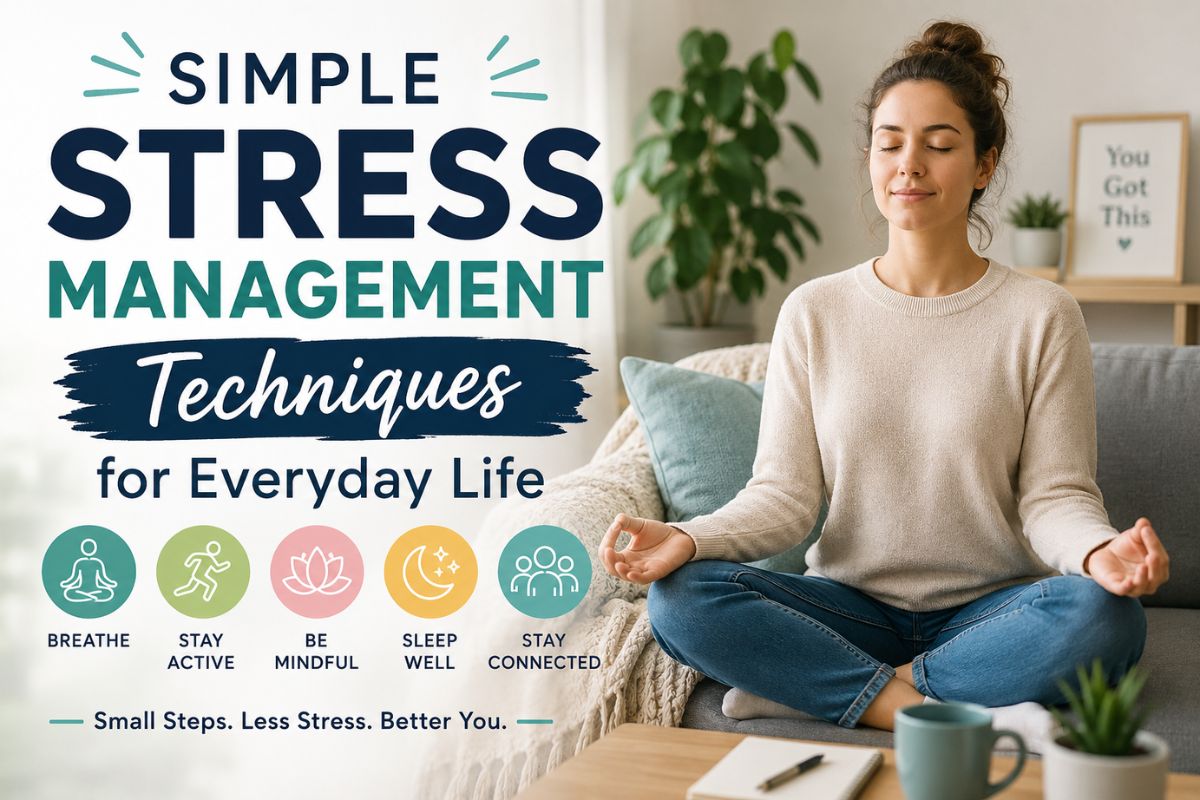
Simple Stress Management Techniques for Everyday Life
Stress is a normal part of life. Whether it’s work deadlines, financial responsibilities, family obligations, or unexpected challenges, most people experience stress regularly. While a small amount of stress can sometimes help motivate us, chronic stress can negatively affect both physical and mental health.
The good news is that managing stress doesn’t require expensive programs or major lifestyle changes. Simple daily habits can make a significant difference in how you feel and respond to life’s challenges. Here are some practical stress management techniques that can help you create a calmer, healthier, and more balanced life.
Understand Your Stress Triggers
One of the first steps in managing stress is identifying what causes it. Stress triggers vary from person to person. Common examples include work pressure, financial concerns, relationship issues, lack of sleep, and health challenges.
Keeping a journal for a few days can help you recognize patterns. Write down situations that make you feel overwhelmed and how you react. Once you understand your triggers, it becomes easier to develop strategies for handling them more effectively.
Practice Deep Breathing
Deep breathing is one of the simplest and most effective stress-relief techniques. When you’re stressed, your body enters a “fight or flight” response, causing your heart rate and breathing to increase.
Taking slow, deep breaths helps activate the body’s relaxation response. Try this simple exercise:
- Sit comfortably and relax your shoulders.
- Inhale slowly through your nose for four seconds.
- Hold your breath for four seconds.
- Exhale slowly through your mouth for six seconds.
- Repeat for several minutes.
Even a few minutes of deep breathing can help reduce feelings of tension and anxiety.
Stay Physically Active
Regular exercise is a powerful tool for managing stress. Physical activity helps release endorphins, which are natural chemicals that improve mood and promote feelings of well-being.
You don’t need an intense workout routine to experience benefits. Activities such as walking, cycling, swimming, yoga, or even gardening can help reduce stress levels.
Health experts often recommend at least 150 minutes of moderate physical activity per week. A simple 20- to 30-minute walk each day can have a positive impact on both your physical and emotional health.
Prioritize Quality Sleep
Lack of sleep and stress often create a frustrating cycle. Stress can make it difficult to sleep, while poor sleep can increase stress levels.
To improve sleep quality:
- Maintain a consistent sleep schedule.
- Avoid caffeine late in the day.
- Limit screen time before bed.
- Create a comfortable sleeping environment.
- Develop a relaxing bedtime routine.
Most adults benefit from seven to nine hours of sleep each night. Better sleep can improve mood, concentration, and resilience to daily stressors.
Practice Mindfulness
Mindfulness involves focusing on the present moment without judgment. Instead of worrying about the future or dwelling on the past, mindfulness encourages you to pay attention to what is happening right now.
Simple mindfulness practices include:
- Paying attention to your breathing.
- Observing your surroundings during a walk.
- Eating meals without distractions.
- Taking a few moments each day to sit quietly.
Research suggests that mindfulness can help reduce stress, improve emotional well-being, and increase overall life satisfaction.
Manage Your Time Wisely
Poor time management often contributes to feelings of overwhelm. When tasks pile up, stress levels can rise quickly.
Consider these time-management strategies:
- Create a daily to-do list.
- Prioritize important tasks.
- Break large projects into smaller steps.
- Set realistic goals.
- Learn to say no when necessary.
Being organized can help you feel more in control and reduce unnecessary pressure.
Maintain Healthy Social Connections
Humans are social by nature, and strong relationships can provide emotional support during stressful times.
Talking with trusted friends, family members, or coworkers can help you gain perspective and feel less isolated. Sometimes simply sharing your concerns with someone who listens can reduce stress significantly.
Make an effort to stay connected through phone calls, social activities, or regular check-ins with loved ones.
Limit Information Overload
Constant exposure to news, social media, and digital notifications can contribute to stress and anxiety.
Consider setting healthy boundaries with technology by:
- Taking regular breaks from social media.
- Turning off non-essential notifications.
- Limiting news consumption.
- Scheduling screen-free time each day.
Reducing digital distractions can help create a greater sense of calm and improve focus.
Focus on Healthy Nutrition
What you eat can influence your mood and stress levels. A balanced diet provides the nutrients your body needs to function properly.
Focus on:
- Fruits and vegetables
- Whole grains
- Lean proteins
- Healthy fats
- Plenty of water
Try to limit excessive amounts of sugary snacks, highly processed foods, and caffeine, as these may contribute to energy crashes and increased stress for some individuals.
Make Time for Activities You Enjoy
One of the easiest ways to reduce stress is to engage in activities that bring joy and relaxation. Hobbies can provide a healthy escape from daily pressures and help recharge your mind.
Whether you enjoy reading, painting, cooking, gardening, listening to music, or spending time outdoors, making time for enjoyable activities can support emotional well-being and reduce stress.
Final Thoughts
Stress is a natural part of life, but it doesn’t have to control your well-being. By practicing simple stress management techniques such as deep breathing, regular exercise, quality sleep, mindfulness, healthy eating, and maintaining strong social connections, you can build resilience and better cope with everyday challenges.
Small, consistent changes often produce the greatest results. Start with one or two techniques that fit your lifestyle and gradually incorporate additional habits over time. With patience and consistency, you can create a healthier relationship with stress and enjoy a more balanced, fulfilling life.
Health Disclaimer: This article is for informational purposes only and is not intended as medical advice. Consult a qualified healthcare professional regarding any concerns about stress, anxiety, mental health, or other medical conditions.