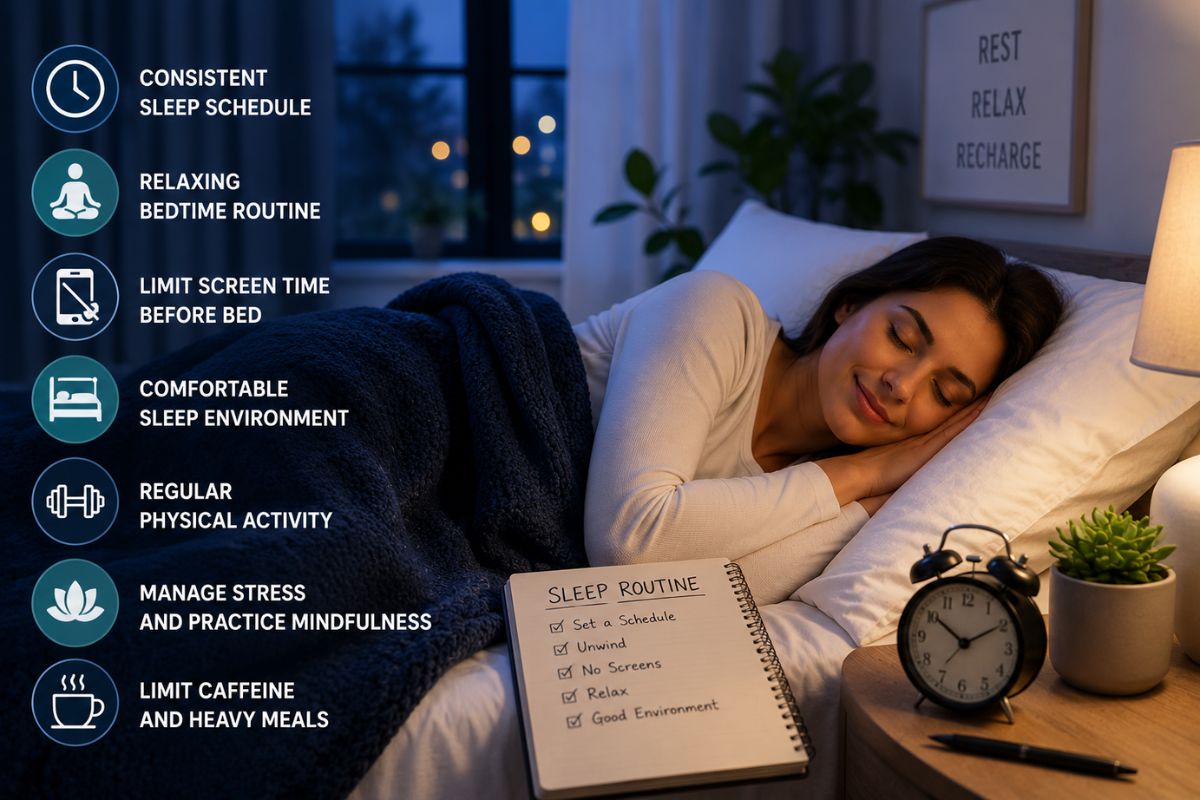
How to Improve Sleep Routine for Adults
Getting enough quality sleep is one of the most important parts of a healthy lifestyle. Yet millions of American adults struggle with inconsistent sleep schedules, late-night screen time, work stress, and busy routines that interfere with restful sleep.
A healthy sleep routine can improve energy levels, mood, focus, productivity, and overall well-being. The good news is that even small changes to your daily habits can make a noticeable difference over time.
If you’re wondering how to improve your sleep routine, this guide offers practical and realistic strategies that fit modern American lifestyles.
Why a Good Sleep Routine Matters
Sleep is more than just rest. During sleep, the body performs essential functions such as:
- Supporting brain function
- Restoring energy
- Regulating hormones
- Supporting immune health
- Maintaining physical recovery
When adults consistently get poor sleep, they may experience fatigue, difficulty concentrating, irritability, and reduced productivity.
According to health experts, most adults should aim for approximately seven to nine hours of sleep per night, though individual needs may vary.
Stick to a Consistent Sleep Schedule
One of the most effective ways to improve sleep is maintaining a regular bedtime and wake-up time.
Many Americans sleep late during the week and then try to “catch up” on weekends. Unfortunately, this can disrupt the body’s natural sleep-wake cycle.
Create a Relaxing Evening Routine
Your body benefits from signals that tell it bedtime is approaching.
Developing a calming pre-sleep routine can help prepare both your mind and body for rest.
Examples include:
- Reading a book
- Taking a warm shower
- Practicing gentle stretching
- Listening to calming music
- Journaling
Even 20 to 30 minutes of relaxation before bed can make a difference.
Reduce Screen Time Before Bed
Phones, tablets, televisions, and laptops are common parts of daily life, but they can interfere with sleep when used late at night.
Many adults spend hours scrolling social media or watching streaming services before bedtime.
Make Your Bedroom Sleep-Friendly
Your sleep environment plays a major role in sleep quality.
A comfortable bedroom should ideally be:
- Quiet
- Dark
- Cool
- Comfortable
Simple adjustments such as blackout curtains, comfortable bedding, or reducing noise can create a more restful environment.
Many Americans also find that removing work-related items from the bedroom helps create a stronger mental association between the bedroom and sleep.
Watch Your Caffeine Intake
Coffee is a daily habit for many Americans, but consuming caffeine too late in the day may interfere with sleep.
Caffeine can remain in the body for several hours after consumption.
If you have trouble falling asleep, consider limiting:
- Coffee
- Energy drinks
- Certain teas
- Some soft drinks
Many people find that avoiding caffeine during the late afternoon and evening helps improve sleep quality.
Get Regular Physical Activity
Exercise supports overall health and may also help improve sleep.
Physical activity can help reduce stress, support healthy energy levels, and encourage better nighttime rest.
Be Mindful of Late-Night Eating
Heavy meals close to bedtime may make it harder for some people to sleep comfortably.
Try to finish large meals a few hours before going to bed when possible.
If you’re hungry later in the evening, a light snack may be a better option than a heavy meal.
Hydration is important as well, though drinking excessive amounts of liquid right before bed may lead to nighttime bathroom trips.
Manage Daily Stress
Stress is one of the most common sleep disruptors among American adults.
Work responsibilities, finances, family obligations, and everyday pressures can make it difficult to relax at night.
Helpful stress-management techniques include:
- Deep breathing exercises
- Meditation
- Journaling
- Regular exercise
- Spending time outdoors
Managing stress during the day often contributes to better sleep at night.
Avoid Relying on Sleep as a Weekend Recovery Tool
Many people try to compensate for poor weekday sleep by sleeping significantly longer on weekends.
While occasional extra sleep is normal, dramatic changes in sleep schedules can disrupt consistency.
Maintaining a relatively stable routine throughout the week often produces better long-term results.
Final Thoughts
Improving your sleep routine does not require drastic changes. Small, consistent habits often produce the best results over time.
By maintaining a regular sleep schedule, creating a relaxing bedtime routine, limiting screen time, staying active, and managing stress, many adults can improve both sleep quality and overall well-being.
The key is consistency. Healthy sleep habits practiced daily can help you wake up feeling more refreshed, focused, and ready to take on the day.
References
- Centers for Disease Control and Prevention (CDC) – Sleep and Sleep Disorders
Provides information about healthy sleep habits, recommended sleep duration, and the importance of sleep for overall health. - National Heart, Lung, and Blood Institute – Healthy Sleep
Offers expert guidance on sleep health, sleep hygiene, and factors that influence sleep quality. - Mayo Clinic – Sleep Tips: 6 Steps to Better Sleep
Covers practical strategies for improving sleep routines, including bedtime habits, exercise, and sleep environment. - Johns Hopkins Medicine – Healthy Sleep Habits
Discusses evidence-based sleep habits that can help adults achieve more consistent and restful sleep. - Cleveland Clinic – Sleep Hygiene Tips for Better Rest
Explains how sleep hygiene practices such as reducing screen time and maintaining a regular schedule can support better sleep.