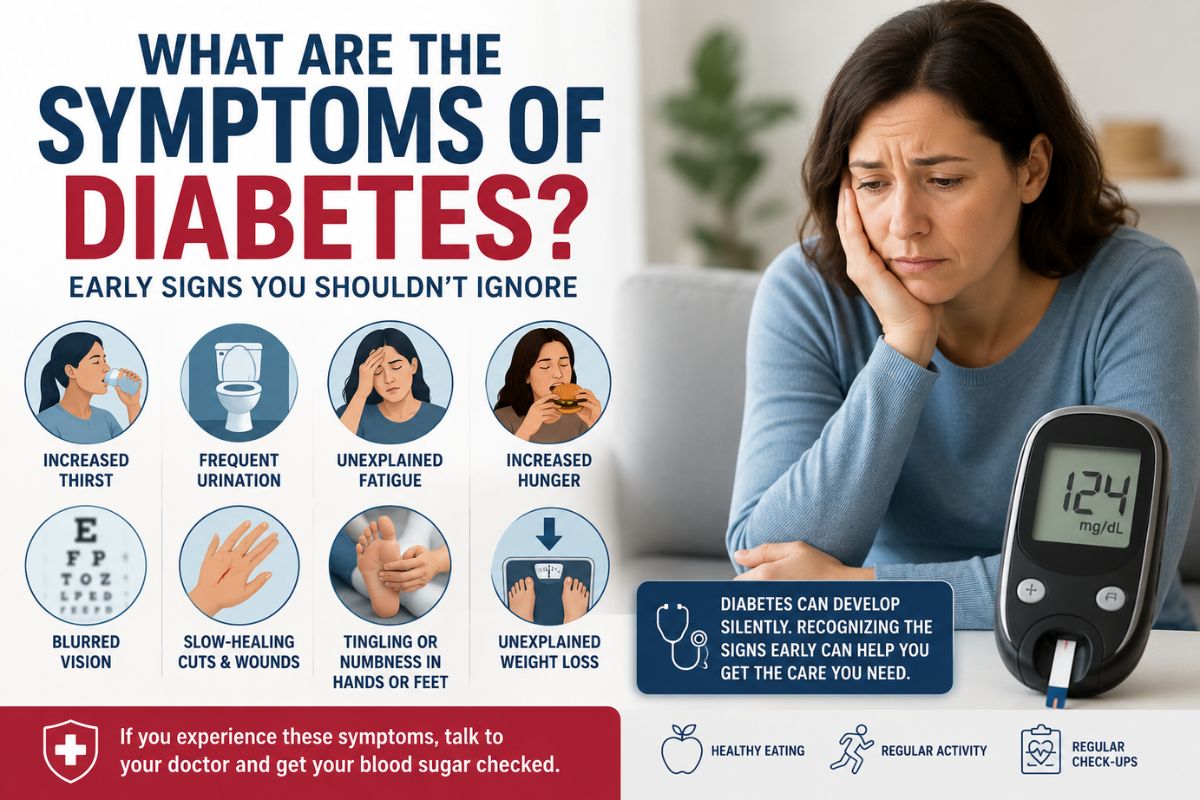
What Are the Symptoms of Diabetes?
Diabetes is one of the most common chronic health conditions in the United States, affecting millions of Americans. According to the Centers for Disease Control and Prevention, more than 38 million Americans have diabetes, and many others have prediabetes without realizing it. Because symptoms can develop gradually, many people overlook the early warning signs until complications begin to appear.
Understanding the symptoms of diabetes can help you recognize potential issues sooner and seek medical advice when necessary.
What Is Diabetes?
Diabetes occurs when the body has difficulty regulating blood sugar (glucose) levels. Glucose is the body’s primary source of energy, but it requires insulin to move from the bloodstream into the cells.
When the body doesn’t produce enough insulin or can’t use insulin effectively, blood sugar levels can rise, leading to diabetes.
The two most common forms are Type 1 diabetes and Type 2 diabetes, with Type 2 accounting for the majority of cases in the United States.
Common Symptoms of Diabetes
While symptoms can vary from person to person, several warning signs are frequently reported.
Increased Thirst
One of the earliest symptoms of diabetes is excessive thirst. High blood sugar causes the kidneys to work harder to remove excess glucose from the bloodstream. As a result, the body loses more fluids through urination, leading to dehydration and increased thirst.
For example, a 45-year-old office worker in Texas might notice that despite drinking water throughout the day, they still feel unusually thirsty and constantly need refills.
Frequent Urination
Because the kidneys are trying to eliminate excess sugar, people with diabetes often urinate more frequently than normal, especially during the night.
Many individuals initially assume this is simply due to drinking more water, but persistent frequent urination can be an important warning sign.
Unexplained Fatigue
When glucose cannot efficiently enter the body’s cells, energy levels may drop. This can lead to ongoing tiredness even after a full night’s sleep.
Imagine a busy parent who suddenly feels exhausted every afternoon despite maintaining the same work schedule and sleeping habits. Persistent fatigue can sometimes signal an underlying blood sugar issue.
Increased Hunger
Even when blood sugar levels are elevated, the body’s cells may not receive enough energy. As a result, people with diabetes may feel hungry more often or shortly after eating.
This symptom is particularly common when diabetes is not yet diagnosed or controlled.
Blurred Vision
High blood sugar levels can affect the small blood vessels in the eyes and cause temporary swelling in the eye’s lens. This may result in blurry or fluctuating vision.
Many Americans first schedule an eye exam after noticing changes in their vision, only to discover elevated blood sugar levels during a medical evaluation.
Slow-Healing Cuts and Wounds
Diabetes can affect circulation and the body’s healing processes. Cuts, scrapes, or minor injuries may take longer than usual to heal.
For instance, someone may notice that a small cut from gardening remains irritated for weeks instead of healing normally.
Tingling or Numbness in Hands and Feet
Persistently high blood sugar can damage nerves over time. This may cause tingling, numbness, burning sensations, or discomfort in the hands and feet.
Many people describe it as feeling like “pins and needles” that occur regularly without an obvious cause.
Unexplained Weight Loss
Unexpected weight loss can be a symptom of diabetes, particularly Type 1 diabetes, but it may also occur in some cases of Type 2 diabetes.
When the body cannot properly use glucose for energy, it may begin breaking down muscle and fat stores, leading to weight loss.
Symptoms That May Affect Women
Women may experience additional symptoms, including:
- Frequent yeast infections
- Recurrent urinary tract infections (UTIs)
- Increased skin irritation
- Dry or itchy skin
These symptoms can sometimes be overlooked because they may appear unrelated to blood sugar levels.
When Should You See a Doctor?
If you notice several of these symptoms occurring together, it’s a good idea to speak with a healthcare professional. Early detection can help prevent complications and improve long-term health outcomes.
Warning signs that deserve attention include:
- Excessive thirst
- Frequent urination
- Persistent fatigue
- Blurred vision
- Unexplained weight loss
- Slow-healing wounds
Final Thoughts
The symptoms of diabetes often develop gradually, making them easy to overlook. Increased thirst, frequent urination, fatigue, hunger, blurred vision, and slow-healing wounds are among the most common warning signs.
While these symptoms do not automatically mean you have diabetes, they should not be ignored. Recognizing the early signs and seeking medical advice can make a significant difference in managing health and preventing complications.
References
- Centers for Disease Control and Prevention (CDC) – Diabetes Basics
Provides comprehensive information about diabetes, risk factors, symptoms, prevention, and management for Americans. - American Diabetes Association – Diabetes Symptoms
Explains common warning signs of diabetes, including increased thirst, frequent urination, fatigue, and blurred vision. - Mayo Clinic – Diabetes Symptoms and Causes
Reviews the early symptoms of Type 1 and Type 2 diabetes, along with potential complications and risk factors. - National Institute of Diabetes and Digestive and Kidney Diseases (NIDDK) – Symptoms & Causes of Diabetes
Offers medically reviewed information about diabetes symptoms, diagnosis, and treatment options. - Cleveland Clinic – Diabetes Overview
Discusses common diabetes symptoms, warning signs, complications, and when to seek medical care. - Johns Hopkins Medicine – Diabetes: Symptoms and Diagnosis
Provides expert insights into how diabetes affects the body and how symptoms may appear in daily life. - MedlinePlus – Diabetes
A trusted U.S. government health resource covering diabetes symptoms, causes, testing, and patient education materials.