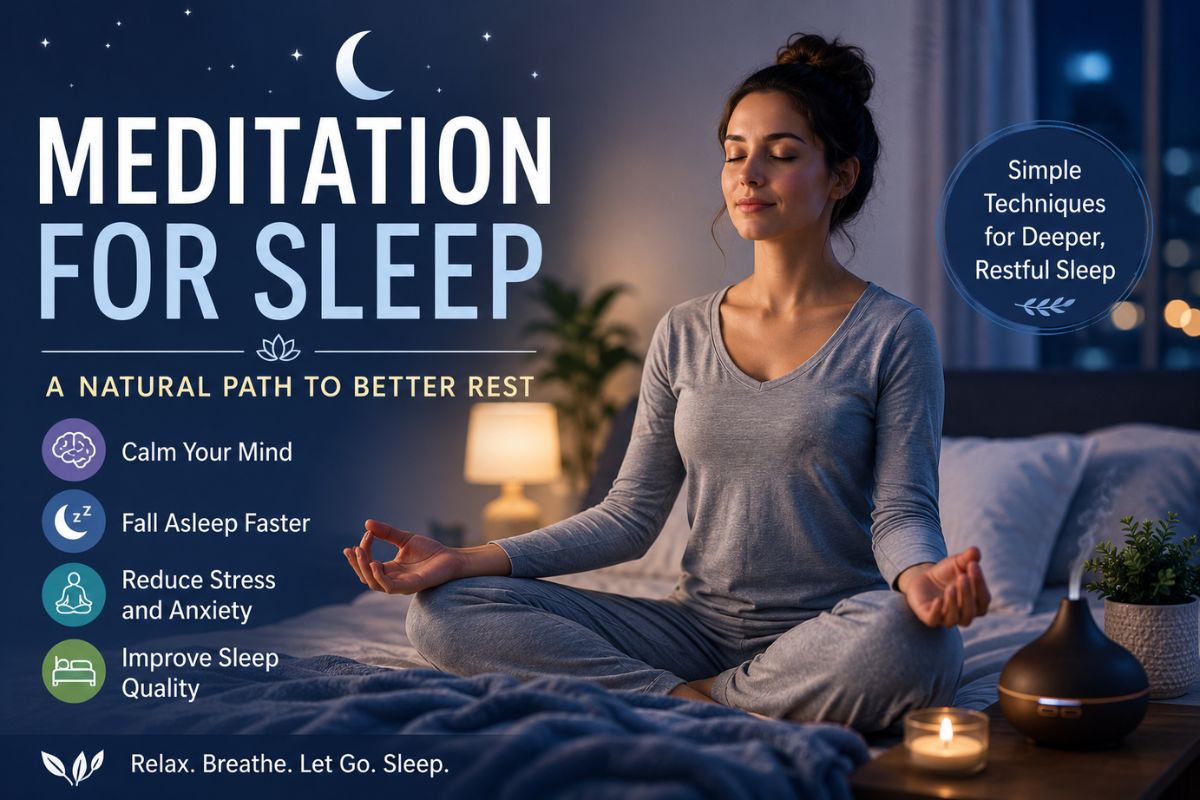
Meditation for Sleep: A Natural Path to Better Rest
Getting a good night’s sleep can feel like a challenge for many Americans. Between busy work schedules, family responsibilities, financial concerns, and constant screen time, millions of people struggle to quiet their minds at bedtime. If you’ve ever found yourself lying awake replaying conversations or worrying about tomorrow’s tasks, you’re not alone.
One natural solution that has gained popularity in recent years is meditation for sleep. Unlike sleeping pills or other sleep aids, meditation helps calm the mind and relax the body naturally. It can be practiced by people of all ages and requires no special equipment.
What Is Meditation for Sleep?
Meditation for sleep is a relaxation technique designed to help the mind slow down and prepare for rest. It typically involves focused breathing, mindfulness, guided visualization, or body awareness exercises.
The goal is not to force yourself to sleep. Instead, meditation helps reduce mental chatter and physical tension that often interfere with falling asleep.
Many people find that even a few minutes of meditation before bed can make a noticeable difference in how quickly they fall asleep and how rested they feel the next morning.
Why So Many Americans Struggle With Sleep
According to various sleep studies, millions of adults in the United States regularly experience sleep difficulties. Common causes include:
- Stress from work or finances
- Excessive screen time before bed
- Anxiety and racing thoughts
- Irregular sleep schedules
- Overconsumption of caffeine
- Lack of relaxation before bedtime
Modern life keeps many people mentally stimulated long after they turn off the lights. Meditation offers a way to transition from a busy day into a calmer state of mind.
How Meditation Helps You Sleep
Reduces Stress
Stress is one of the biggest barriers to quality sleep. Meditation encourages relaxation by helping you focus on the present moment rather than worrying about future events.
As your mind becomes calmer, your body often follows by releasing muscle tension and slowing your heart rate.
Calms Racing Thoughts
Many people struggle with what experts call a “busy brain” at night. Meditation teaches you to observe thoughts without becoming caught up in them.
This can make it easier to let go of worries and drift into sleep naturally.
Promotes Relaxation
Deep breathing techniques used during meditation can activate the body’s relaxation response. This helps signal that it is time to rest rather than remain alert.
Supports Better Sleep Habits
People who meditate regularly often become more mindful of their overall bedtime routines, which can contribute to healthier sleep habits.
Real-Life Examples
Sarah’s Story: Managing Work Stress
Sarah, a 42-year-old marketing manager from Chicago, often found herself awake past midnight thinking about deadlines and meetings. She began listening to a 10-minute guided meditation each night before bed.
After a few weeks, she noticed that she was falling asleep more quickly and waking up feeling less exhausted. While meditation didn’t eliminate her work stress, it helped her manage it more effectively at bedtime.
Michael’s Experience With Racing Thoughts
Michael, a father of two from Texas, struggled with constant mental chatter at night. He started practicing simple breathing meditation for five minutes before sleep.
By focusing on slow inhales and exhales, he found it easier to shift attention away from daily worries. Over time, bedtime became less frustrating and more relaxing.
Linda’s Journey to Better Sleep
Linda, a retired teacher in Florida, often woke up during the night and had trouble falling back asleep. She began using mindfulness meditation whenever she woke up.
Instead of becoming frustrated about being awake, she focused on her breathing and body sensations. This approach helped her relax and return to sleep more easily.
Simple Meditation Techniques for Sleep
Deep Breathing Meditation
One of the easiest techniques involves slow, controlled breathing.
Try this method:
- Lie comfortably in bed.
- Inhale slowly through your nose for four seconds.
- Hold briefly.
- Exhale gently for six seconds.
- Repeat several times.
This practice can help slow your heart rate and encourage relaxation.
Body Scan Meditation
A body scan involves bringing awareness to different parts of your body.
Start at your toes and gradually move upward, noticing areas of tension and allowing them to relax. This technique can help release physical stress accumulated throughout the day.
Guided Meditation
Many people enjoy guided meditations available through mobile apps, podcasts, or online videos. A soothing voice leads you through relaxation exercises and visualizations designed to encourage sleep.
Sleep Supplements and Meditation
While meditation can be an effective way to improve sleep naturally, some people also choose to use sleep supplements as part of their bedtime routine. Common sleep-support ingredients include melatonin, magnesium, chamomile, valerian root, and L-theanine. Yu Sleep is a dietary supplement that uses these ingredients in its formula and is often used to promote relaxation and support healthy sleep patterns.
However, results can vary from person to person, and supplements should not replace healthy sleep habits such as maintaining a consistent bedtime, limiting screen time before bed, and managing stress.
If you’re considering a sleep supplement, it’s a good idea to consult a healthcare professional, especially if you take medications or have existing health conditions. Combining good sleep hygiene, meditation, and appropriate supplementation may help create a more supportive environment for restful sleep.
Tips for Getting Started
If you’re new to meditation, keep these tips in mind:
- Start with just five to ten minutes.
- Be patient with yourself.
- Create a quiet sleep environment.
- Practice consistently.
- Avoid judging your performance.
Meditation is a skill that improves with regular practice.
For more information about meditation for sleep, watch the video below.
Final Thoughts
Meditation for sleep is a simple, natural tool that can help calm the mind and prepare the body for rest. While it may not solve every sleep problem overnight, many people find that regular practice helps them relax more easily and enjoy better-quality sleep.
Whether you’re dealing with work stress, racing thoughts, or occasional sleepless nights, incorporating meditation into your bedtime routine may be a valuable step toward more restful sleep and healthier overall well-being.
References
- National Sleep Foundation – Meditation and Sleep
Explains how meditation can help relax the mind, reduce stress, and support better sleep quality through mindfulness and breathing techniques. - Mayo Clinic – Meditation: A Simple, Fast Way to Reduce Stress
Provides expert guidance on meditation practices and how they can promote relaxation, stress management, and overall well-being. - Johns Hopkins Medicine – The Benefits of Meditation
Reviews research on meditation and its potential benefits for stress reduction, emotional health, focus, and improved sleep habits.